|
 |
Endurance Mindset · 🇺🇸 |
Home•Blog•News•Run With Us•Apply•Plans•Store
|
🌍 ¿Recibes esto en el idioma equivocado? Actualiza tus preferencias en el pie → Español 🇪🇸 |
 |
|
👋🏻 Hey Reader!
Tuesday September 15 · Weekly edition
Happy start of the week. Yesterday I entered the home stretch of my forties — now running version 4.9.
And today's topic has a lot to do with that: when to stop following the plan to the letter.
It sounds odd coming from a coach. But the goal of coaching isn't for you to depend on me — it's for you to learn to read your own body. Although, as you'll see, that sentence carries a caveat almost nobody says out loud.
|
|
The question that rarely gets asked
It isn't "do I have the knowledge?"
It's "who reviews my decision
when I'm tired or excited?"
|
|
|
|
🎯 The runner who thinks they know it all
Almost every serious runner goes through this phase: a couple of years of mileage, enough reading, enough plans tried, and they start thinking "I can build this myself". Sometimes they're right. Sometimes they're not.
I'll be honest about my own position, because it shapes how I read this question: I don't self-coach. Not because I can't structure a mesocycle or calculate pace zones, but because I know exactly where my blind spots are. And they're the same ones any athlete has when looking at themselves from the inside.
|
|
What you genuinely gain by self-coaching
✓ Deep knowledge of your own body. Nobody spends more hours inside it than you. Years of paying attention give you qualitative data no external coach replicates immediately.
✓ Real ownership. Sport psychology is consistent: athletes who feel the plan is theirs report higher adherence.
✓ Immediate flexibility. You don't wait for anyone's reply to adjust when you wake up with a sore throat.
✓ Zero cost. For some runners that's the deciding variable, and that's legitimate.
|
|
|
🔍 The four blind spots
|
| ① Confirmation bias with your own data |
| When you generate the plan, interpret your data and decide whether to push or stop, there's a structural conflict of interest. If you want to run that session today, you'll find the reason to justify that your HRV "isn't that bad". A third party, without that emotional attachment to the session, reads the same number with less filter. |
| ② Reading cardiac signals in yourself · PMID:40667749 |
| Chronic endurance exercise produces cardiac adaptations that sometimes overlap with patterns warranting clinical follow-up, especially in masters athletes with years of high volume. Someone self-monitoring can normalise symptoms — "that always happens to me, it's normal" — that an external eye would pause on. |
| ③ Mistaking accumulated fatigue for progress |
| Reading tiredness as a sign the training "is working", when it's actually early overtraining. What works in one phase can be counterproductive in another, and telling those apart takes more than intuition [PMID:40765038]. |
| ④ The neurochemical bias in your own judgement · PMID:25455510 |
| Regular exercise raises BDNF, with real benefits for mood and cognitive function. But it also means intense exercise creates a state of wellbeing that can bias your read on your own recovery. You feel good mentally and assume the body is ready too — they're systems that aren't always in sync. |
|
|
And this gets more relevant with age, not less
The hormonal changes that come with ageing — including the documented relationship between testosterone deficiency, body composition and vascular health [PMID:26590935] — directly affect recovery capacity and training response.
A masters athlete self-coaching on parameters from ten years ago is, in effect, training a body that no longer exists.
|
|
|
✅ How to decide, honestly
There's no universal answer. But four questions help:
|
| › |
Do you have a history of ignoring signals until they become injuries? If so, self-coaching will cost you recovery time that the financial saving doesn't cover. |
| › |
Are you in a phase of significant physiological change? Perimenopause, andropause, return from a major injury, first years as a masters athlete. There the margin for self-interpretation narrows. |
| › |
Do you have access to periodic reviews? Even without weekly coaching — a quarterly consultation, a plan review every six weeks. That middle ground exists and it works. |
| › |
Is your ego involved in today's decision? If the honest answer is yes, that is the signal you need an outside voice. |
|
|
My position, no hedging
I choose to have someone coaching me not because I can't design my own plan, but because I know that the day I most need a second opinion is exactly the day I trust my own judgement least.
That's the structural problem with self-coaching: the system fails precisely when you most need it to work.
So yes — the goal of coaching isn't for you to depend on me. But it isn't total isolation from outside judgement either. It's autonomy in daily execution, with a second read on the decisions that matter. Execute alone. Validate with company.
|
|
|
|
Quote of the week
"I had no definite plans but only projects."
Napoleon, explaining that rather than obstinately trying to control circumstances, he obeyed them — and they forced him to change his mind constantly. Elsewhere he said people rise by their adaptability.
Via James Clear, 3-2-1 · September 10
|
|
|
| 🔥 BUDAPEST · THE WEEKEND'S REAL DECISION |
 |
|
Track · Ultimate Championship
Kerr won the 1500. But the most interesting decision came from the man who didn't run
Josh Kerr closed Sunday in 3:29.35 for $150,000, with a final 200 in 26.02. Cameron Myers, a 20-year-old Australian, finished 0.33 back. Kessler and Hocker split the podium by a hundredth: 3:30.73 to 3:30.74.
🎯 But the duel of the year never happened. Ingebrigtsen won Friday's 5000 in 12:59.24 — then withdrew from the 1500 on Saturday, managing his recovery from February's Achilles surgery.
He received an exceptional invitation to be there. World Athletics expanded the field to thirteen runners explicitly so he and Kerr would meet. And he still said no.
That's exactly today's topic, executed by one of the best in the world with millions on the line: knowing when the plan — and the narrative, and the pressure — weigh less than the body's signal. |
Read the analysis →
|
|
 |
|
Marathon · Mexico City
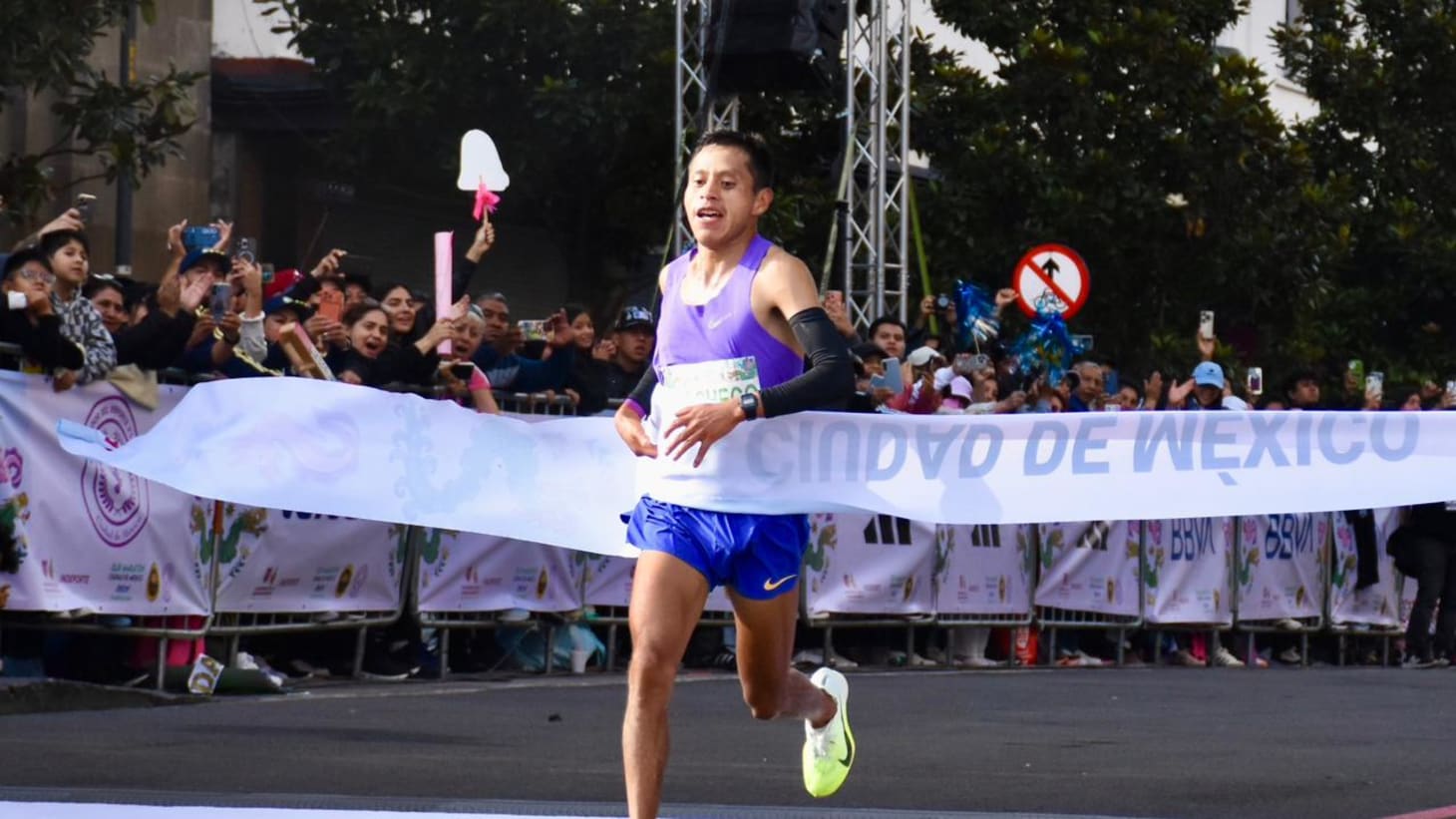
Twelve years later, another Pacheco wins at altitude — and his brother coaches him
Cristhian Pacheco crossed in 2:10:03 at over 2,200 metres above sea level. The last Peruvian flag at the top of that podium went up twelve years ago, raised by his brother Raúl — who is now his coach.
What it means for you: a win at altitude at that pace isn't taken with brute force, it's taken with mathematical patience. And there's something else in this story that fits today's topic: the athlete executes, the brother watches from outside. Two heads looking at the same body.
Read more →
|
|
|
Your question today
Who reviews your training decisions besides you?
Coach, training partner, physio, nobody. Reply with one word. If it's "nobody", that isn't a judgement — it's where the conversation starts.
|
|
Tomorrow, Chicago 4 of 7: race nutrition and hydration. |
|
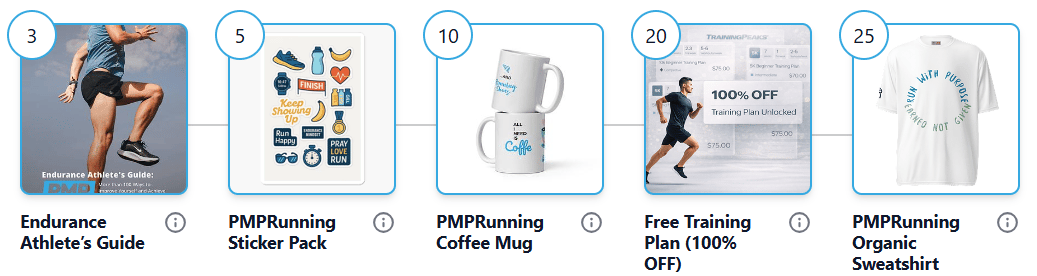
🎁 Run together, earn rewards
Know someone this email would help? Forward it to them. Every subscriber who arrives through your link brings you closer to the next reward.
|
 |
|
Your personal link to share
[RH_REFLINK GOES HERE]
VIEW MY REWARDS →You have [RH_TOTREF GOES HERE] referrals · Code: [RH_CODE GOES HERE]
|
|
|
|
Coach Henri
USATF · TrainingPeaks · Certified Functional Strength Coach
|
|
|
Pray 🙏 · Love ❤️ · Run 🏃♂️
USA · COL · VEN
Unsubscribe · Update preferences · Actualizar preferencias
© 2026 Project Management of Running LLC · El Paso, TX 79911
|
|
