|
 |
Tue Aug 25 · 🇺🇸 |
Home•Blog•News•Share•Apply•Plans•Store
|
 |
🌍 Receiving this in the wrong language? Update preferences in the footer → Español 🇪🇸 |
|
👋🏻 Hey Reader!
Tuesday August 25 · Weekly edition
Happy start of the week to all my readers, and thank you for the chance and the loyalty. Remember Endurance Mindset runs Tuesday through Saturday.
And this weekend had everything — above all in Buenos Aires, where the half marathon world record fell.
On my end, today I'm getting ready to start my cross country season. And we're kicking off something that's been cooking for a while: the Chicago campaign. I ran that marathon in 2018, and we'll be talking about it a lot over the coming weeks.
|
🏙️ New campaign · Road to Chicago |
|
I asked what you wanted, and you answered. Chicago was the top request — so over the coming weeks we're building the full preparation: periodization, paces, race nutrition and race-day logistics.
I ran it in 2018 and I can tell you it's one of the fastest courses in the world for a concrete reason: it's flat, it's cool in October, and the crowd never lets go of you. But that's exactly what makes it treacherous — the course invites you to go out too fast.
Start getting ready. This begins now.
|
|
|
|
⌚ Today's topic: why your easy pace changed
An athlete wrote to me last week, confused: "Henri, I ran the same loop, at the same effort, and finished 25 seconds per kilometre faster than two months ago. Is my watch broken?"
No. The watch is fine. That's aerobic adaptation, and it's measurable.
| The heart changes structure, not just function · PMID:40667749 |
| Consistent training produces cardiac remodelling: greater ventricular chamber volume and better filling and pumping efficiency. Translation: your heart beats fewer times to move the same blood. And this shows up in both young and masters athletes — adaptation still works at 45, 50 and 55. |
| It isn't one system, it's all of them at once · PMID:41922043 |
| Mitochondrial density, capillary density, cardiac efficiency and running economy all improve together and reinforce each other. That's why adaptation feels slow and then seems to "appear" overnight: it was accumulating below the surface for weeks. |
| Your perception of effort recalibrates too · PMID:33389141 |
| Perceived effort isn't an exact thermometer: the brain constructs it from physiological signals. Your "comfortable" today represents less real internal stress than the same "comfortable" three months ago — which is why it holds at a faster pace. |
|
|
What to do with that improvement
① Recalibrate by heart rate, not by the watch. If your zone 2 HR now corresponds to a faster pace, that's the correct pace — not the one you decided two months ago.
② Look at the trend, not the isolated data point. One fast session could be a tailwind. A 3-4 week pattern at the same HR or lower is real adaptation.
③ Don't speed up the easy run "because you can." Running your easy days faster than necessary is the most common way to sabotage a season.
④ Reassess zones every 6-8 weeks. The zones you calculated in January probably don't apply in August.
|
|
|
|
Quote of the week
"The measure of a life is not what you consume, but what you contribute. Spend less time owning, consuming, taking. Spend more time giving, creating, making."
— James Clear
|
|
|
It was a busy stretch between our last email and this one.
|
| 🇦🇷 STORY OF THE WEEK |
 |
|
Road · World record
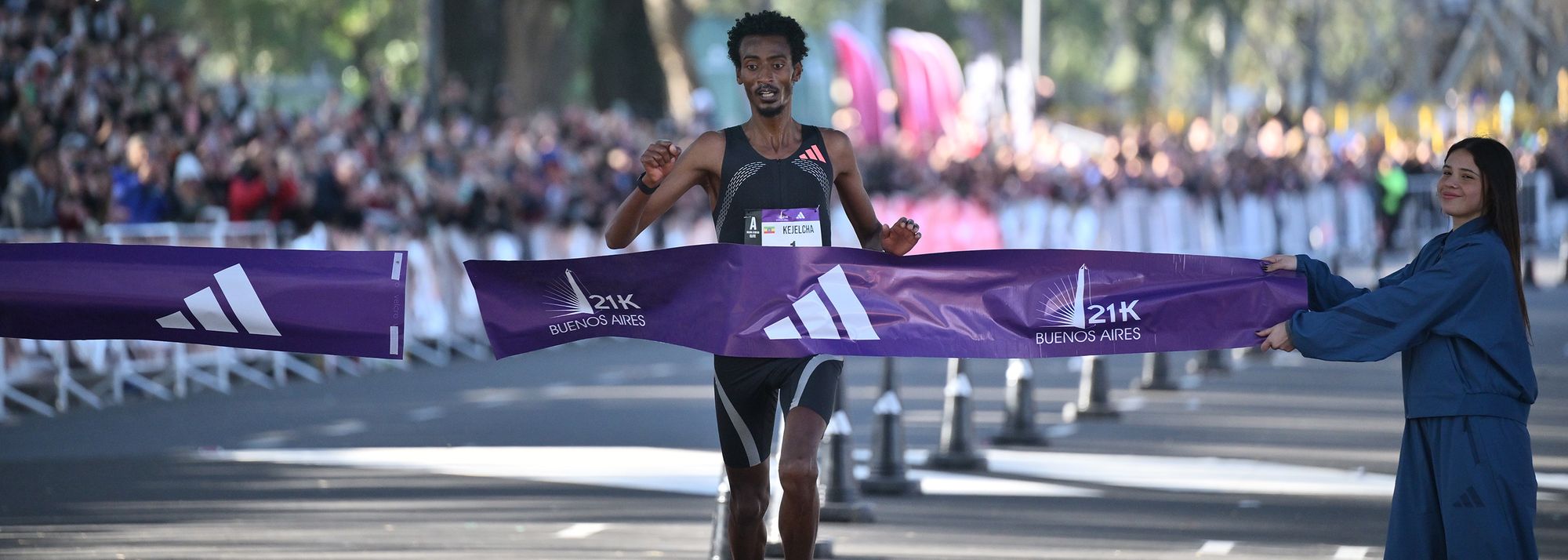
Kejelcha takes back the half marathon world record: 56:51 in Buenos Aires
He took it from Kiplimo, who had set 57:20 in Lisbon just five months ago. In little over a year the record has changed hands three times between these two. Average pace: 2:41 per kilometre for almost an hour.
The detail that matters for you: it was run at 6°C. At that temperature the body isn't spending energy dissipating heat, so full cardiovascular capacity goes to holding pace. That's why road records fall in autumn and winter — and why, if you're chasing a PR, race-day temperature matters as much as your training.
Read the analysis →
|
|
 |
|
Track · Diamond League
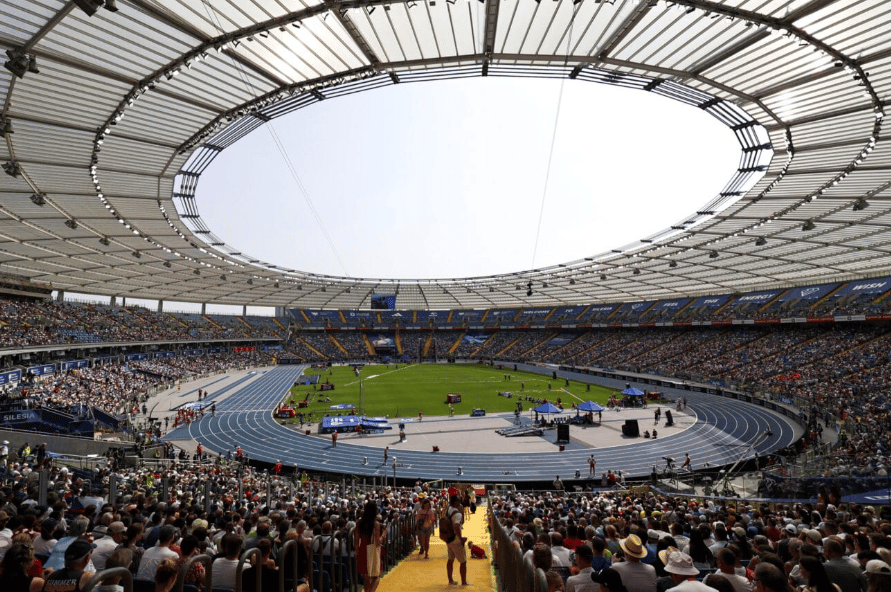
Ingebrigtsen returned to the 1500 in Silesia — his first over the distance since 2024
After Achilles surgery, he first won the 5000 in Birmingham and only then went back to the 1500, against Cole Hocker. That order isn't accidental: rebuild general volume before demanding specific top-end speed. If you're coming back from injury, that's the sequence to copy.
Read more →
|
|
 |
|
Trail · UTMB
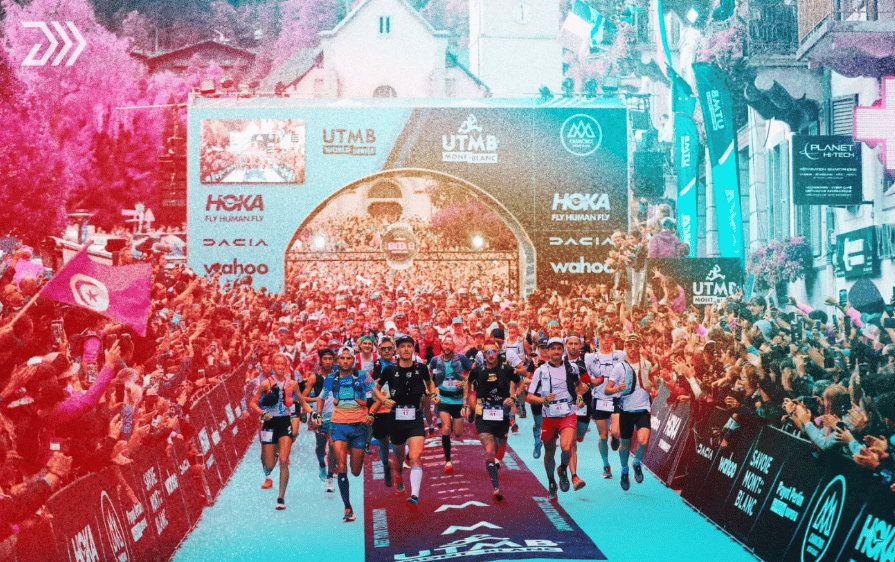
UTMB starts in Chamonix without Jornet, Walmsley, Evans or Schide
846 elite runners from 54 nationalities, August 24 to 30, in the 23rd edition. Organisers doubled anti-doping controls and now require headlamps with a red-light mode on a protected section of the course.
Read more →
|
|
 |
|
Marathon · New York
New York reveals a historic elite field for its 50th anniversary
November 1, with 40 Olympians and Paralympians and 25 world medallists. Weini Kelati debuts at the distance, and Sheila Chepkirui and Geoffrey Kamworor return. Half a century of the five-borough course.
Read more →
|
|
 |
|
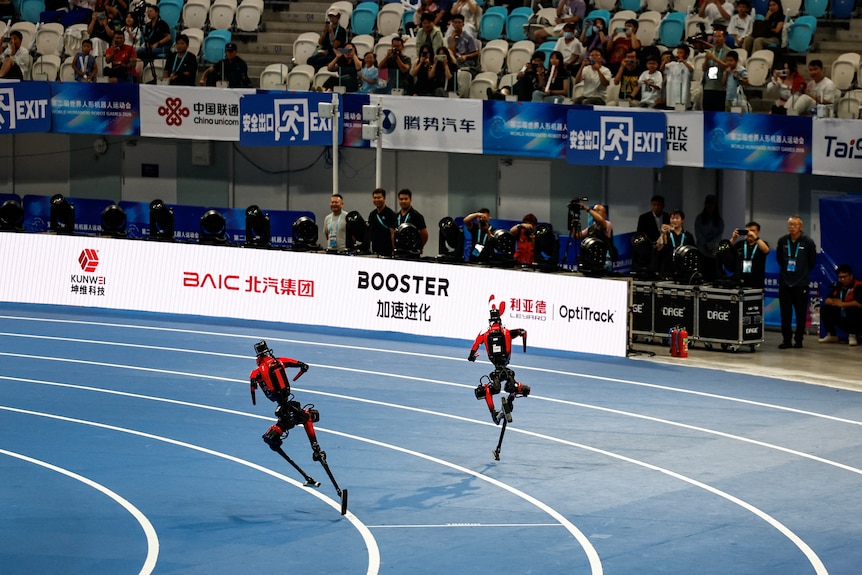
Technology · Curiosity
A humanoid robot ran 100 m in 9.39 — faster than Bolt's world record
Tiangong Ultra, at the World Humanoid Robot Games in Beijing. Bolt needed 9.58 in Berlin 2009.
⚖️ PMP verdict: Bolt's record lost none of its value. Bolt ran with muscle, tendon and a nervous system managing effort under real fatigue. Tiangong executed a program: no lactate, no oxygen, no fatigue. These are achievements of a different nature — comparing them as sport is a category error. |
Read the analysis →
|
|
|
Before you get on with your Tuesday
Notice the thread running through everything today: Kejelcha picking the cool day, Ingebrigtsen respecting the order of his return, and your own easy pace changing without you doing anything different.
All three are the same lesson. Performance doesn't show up on race day — it's built in small, sustained decisions long before. Chicago is in October. What you do this week already counts.
|
|
