|
 |
Tue Sep 1 · 🇺🇸 |
Home•Blog•News•Run With Us•Apply•Plans•Store
|
 |
🌍 Receiving this in the wrong language? Update preferences in the footer → Español 🇪🇸 |
|
👋🏻 Hey Reader!
Tuesday September 1 · Weekly edition
Happy start of the month.
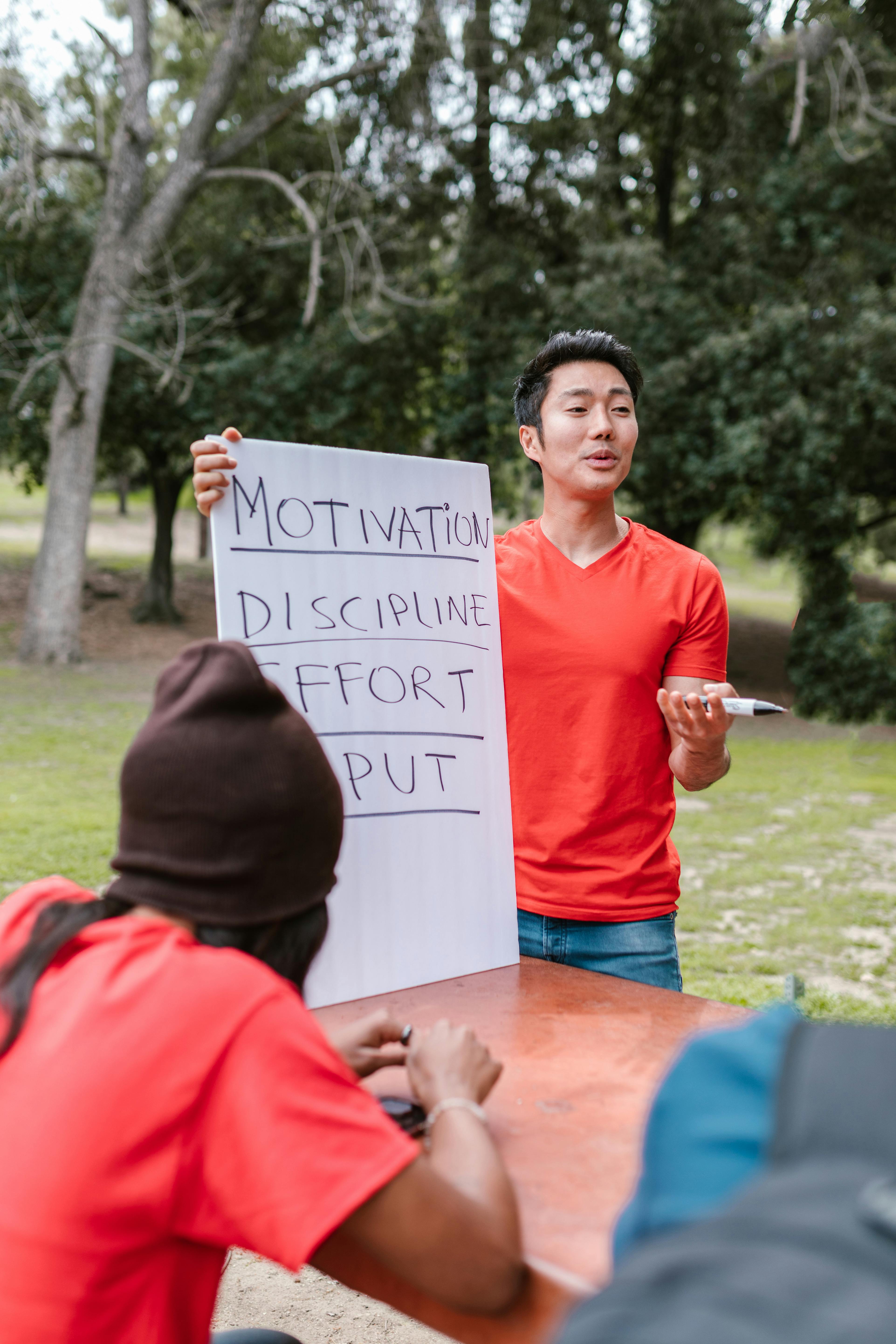
September is the month where a lot of fall plans break, and almost never from lack of physical capacity. Today we talk about why motivation is a terrible foundation to build on, and what replaces it.
And there's a lot to cover: this past weekend was busy, with historic barriers falling on the road and in the mountains.
|
|
The difference that changes everything
|
MOTIVATION
a chemical signal
that fluctuates daily
|
DISCIPLINE
a system that doesn't
depend on your mood
|
|
|
|
|
🧠 The day you don't feel like it
You're going to have that day. In fact, you're going to have many. The plan says 8 km easy, and your head says no. No dramatic reason — you just don't feel like it.
Athletes who abandon a plan almost never do it because of a catastrophic injury. They quit because one day without motivation becomes two, and two becomes "I've already broken the streak, I'll start next week". Motivation carried them while it was available. When it left, there was nothing underneath.
| Motivation is chemistry, not character |
| It's largely dopaminergic, tied to reward anticipation — and that signal is unstable by design. It depends on sleep, stress, weather, whether you ate well. It isn't a personality trait some people have and others don't: it's a physiological state that fluctuates day to day. |
| Your body rewards accumulation, not inspiration · PMID:40667749 |
| Prolonged endurance exercise produces structural cardiac remodelling. Translation: your body changes its architecture in response to what you do consistently — not what you do when you feel inspired. Real adaptations happen through accumulated stimulus, not isolated sessions of high emotional intensity. |
| A habit isn't repeated willpower |
| It's an automated response: a cue triggers a behaviour without any decision about whether you feel like it. The basal ganglia delegate repeated behaviours to circuits operating below deliberate thought. Disciplined people don't have more willpower — they have better systems that reduce how often they need to use it.
|
| Your circadian rhythm doesn't forgive inconsistency · PMID:41752941 |
| Adipose tissue and metabolism have their own circadian rhythms that affect cardiometabolic risk. Training erratically — one day at 5am, another at 9pm, skipping weeks and then compensating — deregulates patterns the body needs to adapt. A body that knows you'll run Tuesdays and Thursdays at 6am responds differently to one that never knows when the next stimulus is coming.
|
|
|
The five moves
① Design the environment before you need willpower. Kit out the night before, bottle ready. If your real obstacle is deciding at 6am whether to go, you lost before you woke up.
② Anchor the habit to something automatic. "After coffee, I put on my shoes" works far better than "I'm going to try to run more".
③ Use the 10-minute threshold. When you genuinely don't feel like it, commit only to the first ten. Almost always, once you start, you keep going.
④ Measure consistency, not intensity. Instead of "how well did I run today?", ask "did I show up?". Reward showing up, not perfection.
⑤ Forgive breaks fast. A habit broken once is a data point. Broken three times in a row is a pattern that needs redesign — not more willpower.
|
|
|
The coach's perspective
I compete in the 3000 m in the masters category, and I don't head out to do intervals at 6am because I feel like it that day. I go because it's on the calendar, the kit was laid out the night before, and the decision to go was made days ago — not that morning.
When I review plans from athletes who "failed", the problem was almost never the plan. It was that they depended on feeling ready to execute it. The ones who progress most long-term aren't the most motivated — they're the ones who built the simplest, hardest-to-break system.
|
|
|
|
Quote of the week
"Don't wait to feel ready. Design the environment so the decision is already made before your brain gets a chance to negotiate."
— Coach Henri
|
|
|
Historic barriers fell in the mountains and on the road, the same weekend.
|
| ⛰️ STORY OF THE WEEK |
 |
|
Trail · UTMB 2026
The 19-hour barrier falls at UTMB — and three men broke it the same day
American Ben Dhiman won in 18:16:29, the fastest time ever run at UTMB. Behind him, Baptiste Chassagne (18:47:38) and Caleb Olson (18:48:24) also went under 19 hours. The entire men's top 10 finished under 20. In the women's race, Blandine L'Hirondel ran 21:54:49, the first woman under 22 hours, with debutant Rachel Entrekin second.
⚠️ The nuance that matters: the start was pushed back two hours for thunderstorms and organisers cut the Pyramides Calcaires section. That's why the time isn't ratified as a course record, even though it's the fastest in the race's history. It doesn't diminish the run — it places it in context. |
Read the analysis →
|
|
 |
|
Marathon · Sydney
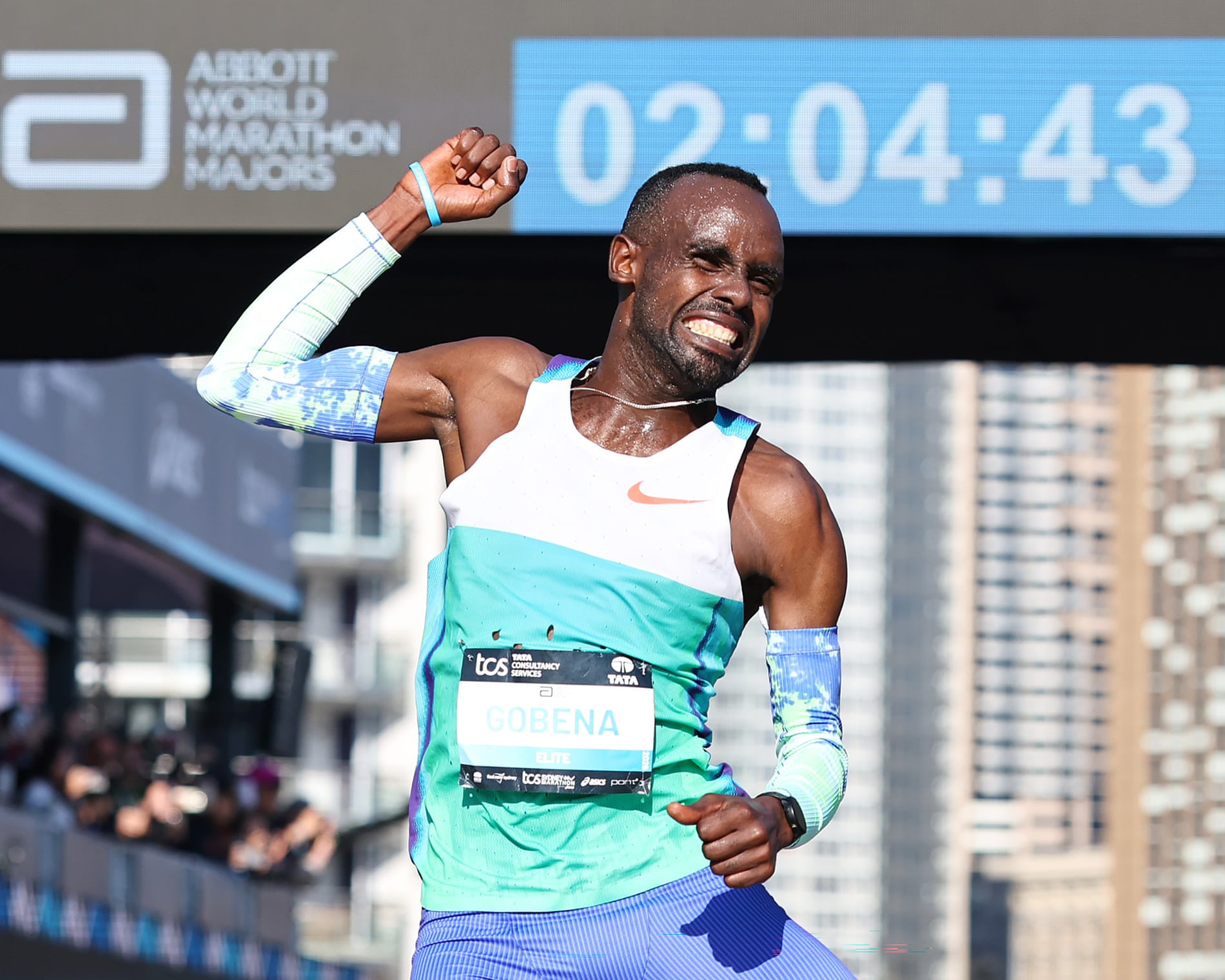
Addisu Gobena breaks the Sydney course record: 2:04:42
A year ago he finished second on this same course. He came back on August 30 and cut over a minute off his own mark, with more than 40,000 runners in Sydney's second edition as a Major.
What it means for you: Gobena already knew the course. He knew where the harbour wind was and where the climb to the bridge sat. If you're running a race you've done before, note where you ran out of fuel and adjust the plan for that specific stretch. That memory is worth seconds per kilometre.
Read more →
|
|
✨ The story that inspires |
|
Four attempts, two DNFs, one second place — and then the fastest run in UTMB history
Ben Dhiman ran UTMB for the first time in 2023. He dropped out. He came back in 2024. He dropped out again. In 2025 he finished second, 33 minutes behind the winner, with the feeling of having come close without getting there.
This year, on his fourth attempt, he took the lead at kilometre 41 and led the remaining 132 alone. He fell hard with only 10 km to go. He got up and kept running. He crossed in 18:16:29 — an hour and a half faster than his own race the previous year, on the same version of the course.
He's 34 and a father of three, including newborn twins. He lives and trains in the French Pyrenees.
Four years of accumulation. That isn't built by one season's motivation — it's built by a system that survived two DNFs.
|
|
|
Your question today
Which of the five moves are you installing this week?
Reply with the number. Just one — not all five. That's exactly the point.
|
|
|
🎁 Run together, earn rewards
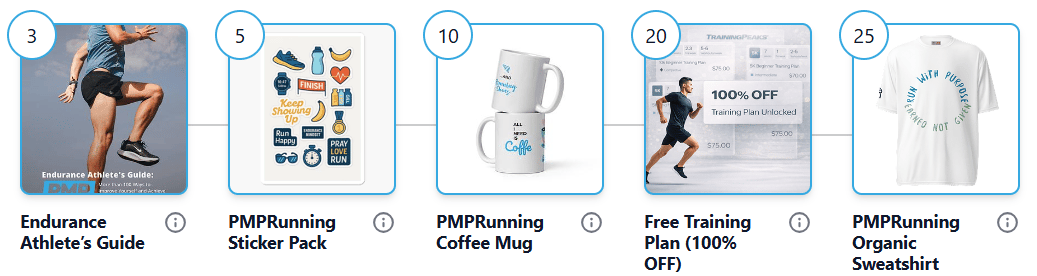
Know someone who started September planning to get back into it? This email lands at exactly the right moment for them. Every subscriber through your link brings you closer to the next reward.
|
 |
|
Your personal link to share
[RH_REFLINK GOES HERE]
VIEW MY REWARDS →You have [RH_TOTREF GOES HERE] referrals · Code: [RH_CODE GOES HERE]
|
|
|
|
Coach Henri
USATF · TrainingPeaks · Certified Functional Strength Coach
Tomorrow, Chicago 2 of 7: your goal pace, with real numbers.
|
|
|
Pray 🙏 · Love ❤️ · Run 🏃♂️
USA · COL · VEN
Unsubscribe · Update preferences · Actualizar preferencias
© 2026 Project Management of Running LLC · El Paso, TX 79911
|
|
