|
 |
Fri Aug 21 · 🇺🇸 |
Home•Blog•News•Share•Apply•Plans•Store
|
 |
🌍 Receiving this in the wrong language? Update preferences in the footer → Español 🇪🇸 |
|
👋🏻 Hey Reader!
Friday August 21 · Short edition
Every summer I get the same message: "I've run a decent 5K — now what do I do for the 10K?"
And the answer almost nobody wants to hear is that it isn't about running twice as far with the same training. Treat the 10K as "a longer 5K" and you'll hit kilometre 7 wondering why your legs stopped responding.
|
|
The number that explains it all
|
95–100%
of VO2max in a 5K
|
85–90%
of VO2max in a 10K
|
Less intensity, nearly twice the time. That changes which system you train.
|
|
|
|
🌉 What actually changes between the two
| The aerobic ceiling isn't enough |
| For the 10K you don't just need a high VO2max — you need to hold a high percentage of that ceiling for nearly twice as long. That's a different capacity, and it trains differently. |
| The 10K lives and dies at your threshold |
| Your body's ability to recycle and clear lactate at a sustained intensity is what separates a controlled pace from a collapse in the final 2K. That's why threshold work becomes the centre of 10K preparation. |
| Why elites open their season with a 5K |
| It's no accident. The 5K calibrates two things at once — VO2max and running economy near threshold — and works as a diagnostic test. It tells you where your ceiling is before you start building toward longer distances. |
|
|
How I build the bridge with my athletes
① Extend threshold before VO2max. From the 800-1200 m work of the 5K cycle we move to 2K-3K reps and continuous 20-30 minute tempos.
② Raise volume gradually. Building over 6-8 weeks before intensifying the specific work. Never all at once.
③ Don't drop the speed work. The 200-400 m work stays. Running economy isn't trained by threshold paces alone.
④ Use the 5K as a checkpoint, not the goal. A control 5K mid-cycle confirms VO2max is holding while we build endurance.
|
|
|
🎯 The two PMPRunning markers
I work with two references I use as performance markers — and also as health indicators:
|
|
These aren't arbitrary numbers. They represent a threshold of aerobic capacity and metabolic efficiency that, working with masters and recreational athletes, correlates with measurable improvements in body composition, insulin sensitivity and cardiovascular health. It isn't running fast for the sake of running fast — it's auditing your metabolic health using performance as the window. |
|
Henri's take
I constantly see athletes arriving from a strong 5K cycle with good speed, and they hit the aerobic wall of the 10K because they never developed the capacity to sustain a submaximal effort for longer.
As a masters athlete competing in the 3000 m, I understand firsthand that the goal isn't accumulating kilometres — it's training so the heart adapts positively without generating excessive chronic stress [PMID:40667749].
|
|
|
|
Your question today
Are you already sub-30 in the 5K? Or is sub-60 in the 10K still the goal?
Reply with your current time. I'll tell you which one to work on first.
|
|
|
🎁 Run together, earn rewards
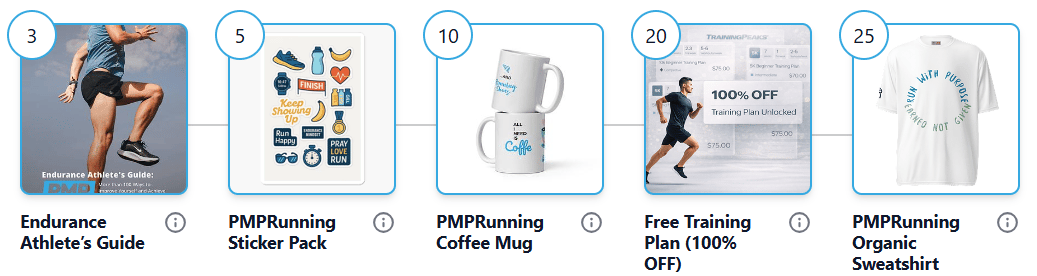
Every person who subscribes with your link brings you closer to the next reward. You share, they join, you stack up.
|
 |
|
Your personal link to share
[RH_REFLINK GOES HERE]
VIEW MY REWARDS →You have [RH_TOTREF GOES HERE] referrals · Code: [RH_CODE GOES HERE]
|
|
|
|
Coach Henri
USATF · TrainingPeaks · Certified Functional Strength Coach
Have a good weekend. If you're heading out for a long run, make it genuinely slow.
|
|
|
Pray 🙏 · Love ❤️ · Run 🏃♂️
USA · COL · VEN
Unsubscribe · Update preferences · Actualizar preferencias
© 2026 Project Management of Running LLC · El Paso, TX 79911
|
|
