|
 |
Endurance Mindset · 🇺🇸 |
Home•Blog•News•Run With Us•Apply•Plans•Store
|
🌍 ¿Recibes esto en el idioma equivocado? Actualiza tus preferencias en el pie → Español 🇪🇸 |
 |
|
👋🏻 Hey Reader!
Tuesday September 8 · Weekly edition
Happy start of the week — and happy Labor Day hangover for those of us on this side.
Today I've got a topic for the VO2max devotees. For anyone who checks that number on their watch like it's a verdict.
Because two runners with the same VO2max can finish a marathon twenty minutes apart. And the reason is almost always the same one.
|
|
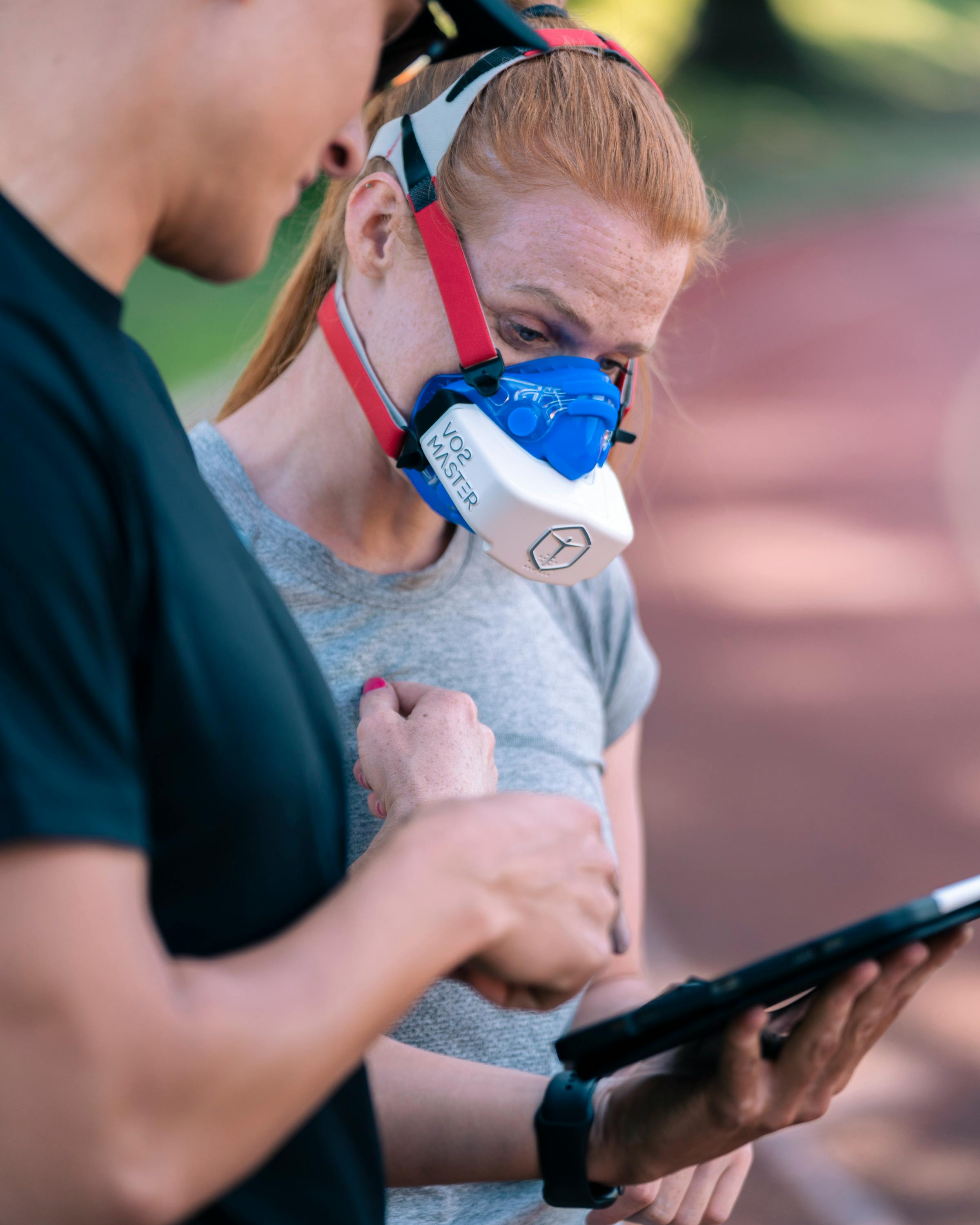
Two of my athletes · nearly identical VO2max
The difference isn't in the engine. It's in how much oxygen each one needs to hold the same pace.
|
|
|
|
⚙️ What running economy actually is
It's the oxygen consumption required to run at a given submaximal speed. Translated: if two runners have the same VO2max, the one consuming less oxygen at 4:30 min/km is more economical — and, all else equal, faster.
For years VO2max was treated as the king indicator in distance running. But Saunders and Pyne's research made clear that economy explains performance variability VO2max doesn't [PMID:15233599]. Among runners of similar level, it's usually the factor separating the podium from mid-pack.
|
|
🦵 The four biomechanical factors
|
| Stride length and frequency |
| There's no universal ideal stride, but there is an optimal range per runner. Overly long strides create braking: the foot lands ahead of the centre of mass and acts as a microscopic brake on every contact. Thousands of repetitions of that brake cost oxygen. |
| Musculotendinous stiffness |
| A stiffer tendon system stores and returns elastic energy more efficiently, like a spring. Runners with stiffer Achilles tendons tend to be more economical because they exploit the stretch-shortening cycle better on every stride. |
| Vertical movement of the centre of mass |
| Every extra centimetre your body rises and falls is energy spent on an axis that adds no horizontal speed. Economical runners minimise that displacement without eliminating it — some oscillation is normal and necessary. |
| Symmetry and neuromuscular coordination |
| A hip that rotates more on one side, an arm crossing the midline. These aren't visual curiosities: they represent extra muscular work to compensate, and that work consumes oxygen too. |
None of them acts alone. Economy is a system, not a checklist.
|
|
The best-supported intervention: strength
This is no longer coaching intuition. A 2024 meta-analysis examined the effect of different strength programmes on economy at different speeds in middle- and long-distance runners: strength training improves it consistently, and the effect holds across speeds — not just at race pace [PMID:38165636].
But the finding I consider most relevant came in 2025. Zanini and Folland didn't measure "fresh" economy — they measured its durability: how much it deteriorates after accumulated effort. They found strength training improved both economy under fatigue and high-intensity performance after fatigue [PMID:40016936].
That changes everything for the marathon: the economy you measure fresh at km 2 isn't the one you have at km 32.
|
|
|
Why it amplifies in the marathon · PMID:33151776
Jones and Kirby studied the demands of running at 2-hour marathon pace. One key finding: at those sustained intensities, small improvements in economy translate into savings that accumulate exponentially.
Saving 1-2% of oxygen over a 15-minute effort isn't the same as over a 130-minute one.
|
|
|
🎯 How I work it with my runners
|
| 1 |
Structured strength, year-round
Not "squats now and then". Two weekly sessions with real load progression, including maximal strength (3-6 reps at high loads) and plyometric work. I don't save it for preseason — I keep it through the whole cycle, adjusting volume.
|
| 2 |
Specific technique work, not generic
Drills without purpose don't change much. What helps is identifying your specific pattern — does the hip collapse? too much vertical movement? braking from overstriding? — and working that, not a universal routine copied off the internet.
|
| 3 |
Volume at specific paces
Economy is also trained by running. Being economical on an easy jog isn't enough — you have to be economical at the speed you'll race.
|
| 4 |
Quality work under accumulated fatigue
Quality work in the second half of long runs. Not to wreck the athlete, but to expose them to holding good mechanics while tired — the exact condition Zanini and Folland described as trainable.
|
|
|
One important caveat
Improving economy doesn't replace aerobic or threshold work. An extremely economical runner with a low VO2max still has a low ceiling. Economy multiplies what you already have — it doesn't substitute for it.
But if you've been stuck at the same pace for months despite consistent volume, it's worth asking: is this an engine problem, or a question of how much fuel your engine burns to move the same body at the same speed?
For a lot of runners, the answer is more in the gym than they imagine.
|
|
|
|
Quote of the week
"I train like I've never won, and I compete like I've never lost."
Eileen Gu, three-time Olympic freestyle skiing champion, on the two different mindsets training and competition demand.
Via James Clear, 3-2-1 · September 3
|
|
|
| 🔥 THIS WEEK · BUDAPEST SEP 11-13 |
|
The World Athletics Ultimate Championship begins — and the 1500 m is the race of the year
This Thursday the first Ultimate Championship starts in Budapest, with a $10 million prize pot. World Athletics broke its own one-athlete-per-discipline rule and expanded the 1500 m to thirteen runners through exceptional invitations.
The result: Josh Kerr and Ingebrigtsen on the same start line, with Cole Hocker and Isaac Nader in the same field. Ingebrigtsen came in via automatic invitation to the 5000 m and exceptional invitation to the 1500 m.
👀 Watch it with today's lens: the 1500 m is where running economy shows most nakedly. At those speeds, the gap between gold and fourth is rarely VO2max — it's who burns less oxygen holding the same pace on the final lap. |
|
Results coverage comes next Tuesday.
|
 |
|
Race Walk · World Athletics
A distance is born: the first world record standards for the marathon race walk
The Council approved inaugural standards for the marathon race walk, which along with the half marathon replaces the 50 km format. It's rare to watch a world record born from scratch in a sport this established.
What it means for you: these walkers will face the same dilemma you already know — going out too fast costs you at km 35, and there's no accumulated pacing history to guide them. They'll learn it live.
Read more →
|
|
|
Tech · Footwear
Nike puts its shoe finder inside ChatGPT
The Running Shoe Finder now works inside the conversation, no extra tab needed. You describe your volume and your goal, and it recommends models. US only for now.
|
⚖️ Useful for the healthy runner wanting quick first-pass guidance on replacing shoes.
⚖️ Not useful for anyone with an injury history or about to make a big volume jump. No AI conversation replaces an in-person gait analysis there.
|
Full verdict →
|
|
|
Your question today
How many strength sessions did you do last month?
Reply with the number. If it's under six, that's your biggest margin for improvement — and it doesn't require running a single extra kilometre.
|
|
Tomorrow, Chicago 3 of 7: the long run at marathon pace. |
|
🎁 Run together, earn rewards
Know someone this email would help? Forward it to them. Every subscriber who arrives through your link brings you closer to the next reward.
|
 |
|
Your personal link to share
[RH_REFLINK GOES HERE]
VIEW MY REWARDS →You have [RH_TOTREF GOES HERE] referrals · Code: [RH_CODE GOES HERE]
|
|
|
|
Coach Henri
USATF · TrainingPeaks · Certified Functional Strength Coach
|
|
|
Pray 🙏 · Love ❤️ · Run 🏃♂️
USA · COL · VEN
Unsubscribe · Update preferences · Actualizar preferencias
© 2026 Project Management of Running LLC · El Paso, TX 79911
|
|
