|
 |
Endurance Mindset · 🇺🇸 |
Home•Blog•News•Run With Us•Apply•Plans•Store
|
🌍 ¿Recibes esto en el idioma equivocado? Actualiza tus preferencias en el pie → Español 🇪🇸 |
|
 |
|
👋🏻 Hey Reader!
Wednesday September 9 · Chicago series · 3 of 7
Yesterday we covered running economy. Today, the session that trains it most between now and Chicago.
If you could only do one quality workout before October 11, this would be it.
|
|
Sunday October 11 · 7:20 am
32 DAYS
|
|
|
|
🎯 The most honest question I get
"Henri, this week I could only fit one quality session in. Which one do I pick?"
It isn't an odd question. Most of the runners I coach don't live in a perfect periodisation laboratory. They live with 50-hour jobs, kids who get sick, delayed flights and four-hour nights.
When life gives you one window, the question isn't "what would be ideal?" — it's "what gives me the most marathon per minute invested?"
|
|
The answer, almost always
The long run with blocks
at marathon pace
|
|
|
🏆 Why this session takes the crown
The marathon is a strange event within athletics: it isn't run near VO2max. It's run at a sustained submaximal intensity that depends on how efficiently your body uses fat and glycogen over hours, not minutes.
Jones and Kirby identified the three pillars that determine the result [PMID:33151776] — and top speed isn't one of them:
|
| › |
Running economy — exactly yesterday's topic |
| › |
Holding a high %VO2max without accumulating metabolic fatigue |
| › |
Fuel management across the race |
This session works all three at once, and under the same conditions you'll face on October 11: duration, cardiac drift, partial glycogen depletion.
|
No other session reproduces that combination of muscular, metabolic and mental stress. Not track intervals, not fartlek, not the 20-minute tempo.
You can improve your VO2max with short reps. But the marathon isn't won or lost at VO2max: it's won or lost at kilometre 30, when glycogen runs short and technique starts falling apart.
That kilometre can only be trained by simulating it. |
|
|
📋 What the session looks like
First things first: I'm not talking about running a full 32 km at marathon pace. For most recreational runners that's a recipe for acute overtraining and a forced recovery week.
|
Template · reference marathon 3:30 – 4:15 |
| 15-20′ |
Easy activation jog |
| 3-5 KM |
Easy pace — let the body genuinely warm up |
| 8-16 KM |
THE CENTRAL BLOCK — at marathon pace. Volume depends on the phase of your block and your history. |
| 3-5 KM |
Cool-down jog |
|
|
|
IF YOU'RE SUB-3:15
The pace block can go in the second half of a 28-32 km run, simulating exactly the accumulated fatigue you'll face on race day.
|
|
|
IF YOU HAVE AN INJURY HISTORY
Break it up: 2-3 blocks of 15-20 min separated by 5 min jogging, within the same long run. Same metabolic stimulus, less mechanical risk.
|
|
|
|
What happens in your heart · PMID:40667749 · PMID:41370052
I discuss this a lot with masters athletes, because I compete in that category myself: prolonged effort isn't free for the heart, even in healthy, trained runners.
Long loads produce measurable acute changes in ventricular function that, in most cases, resolve with adequate recovery — but they're accentuated by age and by lack of gradual progression.
This isn't an alarm. It's a concrete reason not to improvise this session as if it were "run fast for a long time and see what happens".
|
|
|
📊 How to know your body is absorbing it
Without a lab, I use three simple, reliable proxies:
|
| ✓ |
Resting heart rate on waking |
| ✓ |
Perceived sleep quality |
| ✓ |
Drift in perceived effort at constant pace — does marathon pace feel the same week to week, or is it starting to cost more for the same pace? |
That third one is, for me, the most honest signal I have without lab technology.
|
|
What to do with the rest of the week
If this is your only quality session, the rest of the week should protect it, not compete with it:
→ Genuinely easy jogs, without the temptation to add some pace midweek
→ Full rest or light cross-training the day before
→ Don't chase mileage — prioritise the quality of this session over accumulating easy volume
→ Sleep before everything else. Recovery isn't optional, it's part of the training
|
|
|
My perspective as a coach
I've watched athletes on five-quality-sessions-a-week plans arrive at the start line more broken than those who did one well-executed session, week after week, for 12 to 16 weeks.
The consistency of one specific, well-dosed session beats — in most of the real cases I see — the ambition of a plan nobody can sustain alongside their actual life.
If your week gives you one window, don't waste it on speed you won't use on October 11. Use it to train exactly what race day will demand: holding a specific pace, under accumulated fatigue, for a long time.
That's the skill. Train it.
|
|
|
|
Your question today
How many kilometres at marathon pace were in your most recent long run?
Reply with the number. You have four long runs left before the taper — I'll tell you how to distribute them.
|
|
Next Wednesday, Chicago 4 of 7: race nutrition and hydration. |
|
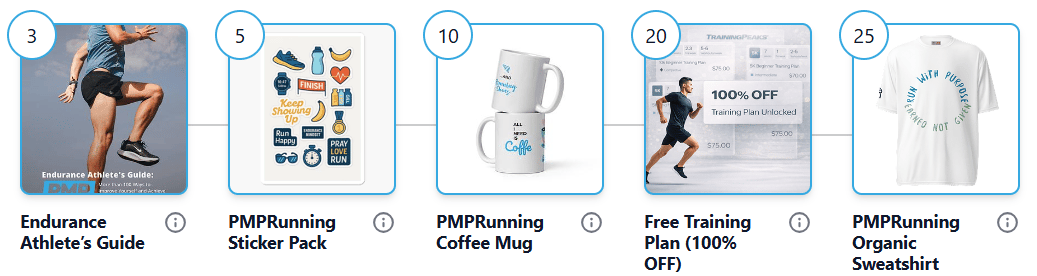
🎁 Run together, earn rewards
Know someone this email would help? Forward it to them. Every subscriber who arrives through your link brings you closer to the next reward.
|
 |
|
Your personal link to share
[RH_REFLINK GOES HERE]
VIEW MY REWARDS →You have [RH_TOTREF GOES HERE] referrals · Code: [RH_CODE GOES HERE]
|
|
|
|
Coach Henri
USATF · TrainingPeaks · Certified Functional Strength Coach
|
|
|
Pray 🙏 · Love ❤️ · Run 🏃♂️
USA · COL · VEN
Unsubscribe · Update preferences · Actualizar preferencias
© 2026 Project Management of Running LLC · El Paso, TX 79911
|
|
